Film or Episodes: Picking a Format for the Evening You Have
Compare a film with an episode by story structure, continuity and the kind of ending you want, then choose a format that makes sense tonight.
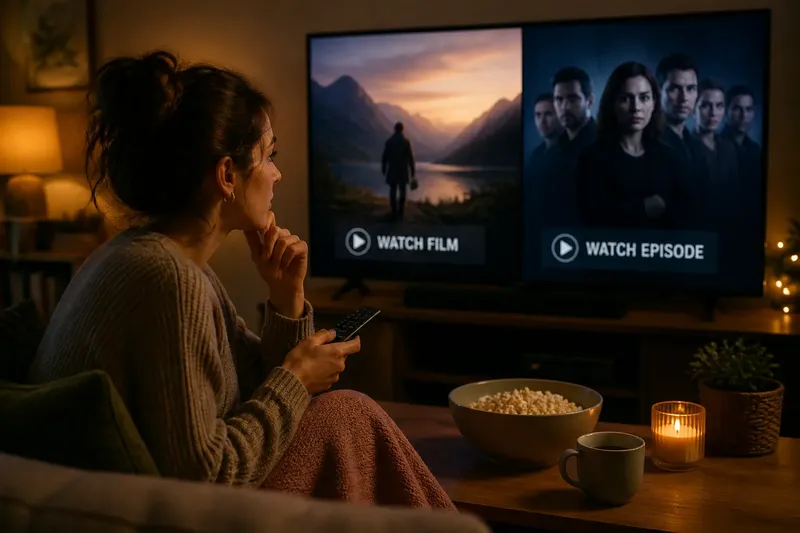
Should you choose a film or episodes tonight? For film or episodes, the useful distinction is not simply how long you have: it is whether you want one story to close or a continuing world to revisit. That choice changes how the evening feels, even when both options fit your schedule.
Story shape
A feature usually gathers its characters and conflicts into one arc, aiming for an ending that gives the viewing a sense of completion. A series can resolve a smaller problem in each instalment while leaving a larger thread open.
Those are tendencies, not rules. Some films leave deliberate questions unanswered, while some series offer a self-contained story in every episode. Check the programme description and episode summaries for clues about the shape of the story, rather than relying on the format label.
Continuity demands
A serialised drama may ask you to remember names, clues and decisions across episodes. That can be rewarding if you enjoy returning to a story, but less appealing if you want to arrive without recalling what happened last time.
A film concentrates its story in one sitting, which can make its emotional arc easier to follow without a recap. Yet a dense feature can be harder to track than a light, self-contained episode. Consider the title’s style and subject, not only whether it is a film or a series.
Think of a series like a set of connected letters: each may have its own point, but the larger exchange keeps unfolding. A film is more like a single note with a final cadence. Neither shape is inherently better; they offer different kinds of closure.
Endings and pauses
Credits can act as a natural boundary, but they do not always mean the story is finished. A series may end an episode on a cliffhanger, while a film may reach a clear emotional resting place well before its final scene.
Autoplay can blur that boundary by starting the next episode before you have decided whether to continue. Turn it off in the streaming service’s playback settings if you prefer to make that choice yourself. For a film, check whether your player saves your position if you expect to pause and return later.
Imagine you have two options saved: a mystery episode that ends on a reveal and a feature that resolves its main conflict before the credits. If you want a satisfying stopping point, the feature may suit you better; if you are happy to carry an unanswered question into tomorrow, the episode may be more appealing.
Picking film or episodes: what should you ask?
Does a film always have a complete ending?
No. Some films leave a character’s future or a central question open, so check the synopsis if closure matters to you. A feature still tends to centre on one main arc, but its ending can be deliberately unresolved.
Are episodes always self-contained?
No. Some series tell one continuous story, while others give each instalment its own plot. Episode descriptions can help you tell which kind you are considering.
How can I tell if a series needs a recap?
Look for clues in the season description and episode summaries, especially references to an ongoing mystery or events from earlier instalments. If you want to drop in without preparation, a programme described as episodic or anthology-based may be a better fit.
What if I pause in the middle?
Check that the player saves your position and that you are comfortable returning to the story later. If you would rather leave with a sense of closure, choose a title that reaches a clear resolution before you stop.
Compare the choices
Before browsing further, consider what kind of experience you want rather than trying to rank the formats. These checks can make the choice more concrete:
- Check whether the synopsis describes one central plot; if it does, choose the feature for a single-arc story, but if it describes a continuing world, consider an episode.
- Check the episode summary for references to earlier events; if they appear, choose a series only if you are comfortable following ongoing continuity, otherwise pick a more self-contained title.
- Check whether the episode description promises a resolved case or problem; if it does, choose it for a contained story, but if it centres on a cliffhanger, choose a feature or another episode if you want firmer closure.
- Check whether the film’s synopsis signals an open ending; if that suits you, keep it in consideration, but if you want a clear resolution, choose a title whose description points towards a completed arc.
- Check autoplay settings; if the service starts another episode automatically, switch autoplay off if you want to decide at the credits, otherwise leave it on if you prefer uninterrupted continuation.
- Check whether playback resumes where you stopped; if it does, a mid-film pause is practical, but if it does not, choose an episode boundary or another title that you can finish in one sitting.
For film or episodes, choose by the story shape you want to spend time with: a concentrated arc, a sequence of smaller stories, or a longer thread that keeps unfolding. If neither option offers the kind of ending you want tonight, saving both for another occasion is a perfectly useful decision.