A Shared Screen Night with Room for Everyone's Pick
Plan a shared screen night with a short shortlist, a fair turn-taking method and a backup, so the group can settle on something without a long debate.

How do you plan a shared screen night when everyone wants a say, but nobody wants to spend the evening negotiating? Start with a small shortlist, choose one simple turn-taking method and keep a backup ready. That gives each person a clear chance to shape the viewing without turning the sofa into a committee meeting.
Keep the choice manageable
The aim is not to find the one title everyone would pick alone. It is to create a decision the group can accept together, with enough room for individual preferences to count. A little structure helps because it puts a boundary around browsing and makes the process easy to follow.
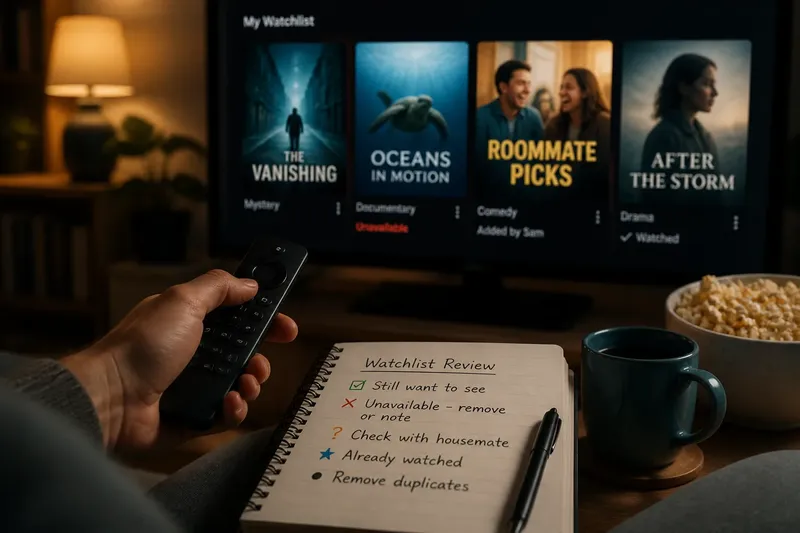
Collect options before the gathering rather than asking the group to search from scratch once everyone is settled. Invite each person to suggest one title, or let the host offer a few choices and ask guests to add a missing possibility. Include the streaming service or other source alongside each suggestion, so no one discovers at decision time that the title is unavailable to the group.
Keep the shortlist deliberately brief. A long queue can feel like more choice, but it also gives the group more opportunities to reopen settled questions: mood, length, genre, familiarity and who has already seen what. A small menu is like a shared bowl of snacks: everyone can reach it, but nobody needs to inspect every item in the kitchen.
Three ways to decide
There is no single fair method for every group. A couple of close friends may prefer a quick vote; a regular group may enjoy rotating the choice; a mixed gathering may need a host to curate options that suit the room. Choose the lightest method that gives everyone a meaningful voice.
Quick group vote
Put the shortlisted titles in front of everyone and ask each person to name their first choice. If one option leads clearly, start it; if the result is tied, use a quick tie-break such as a second vote between the leading choices. This suits groups that want to decide together and are comfortable with a straightforward majority.
A vote works best when every option is genuinely acceptable to the person proposing it. It can feel less satisfying if someone offers a title they strongly want and then watches it lose, so ask for suggestions the group can at least consider rather than personal must-sees. If the group is large, a private message or a simple show of hands can keep the vote brisk without inviting speeches for every option.
Rotating chooser
Give the choice to a different person each time the group meets. The chooser selects from the shared shortlist, while everyone else can flag a practical concern, such as a title being inaccessible or unsuitable for someone present. This approach suits recurring gatherings where people value a predictable turn more than a fresh vote every time.
Rotation is easiest when the order is visible and the group agrees that a missed evening does not erase anyone’s turn. Keep the rule uncomplicated: the person choosing now picks, and the next person takes the next occasion. If a chooser would rather not decide, they can pass the turn once, instead of turning the group’s plan into a negotiation about whether they should choose.
Host-curated menu
The host brings a few options that fit the occasion, then asks guests to choose among them. This is useful when the group includes newcomers, children or people with different levels of familiarity with the services available. The host does the advance sorting, but the group still makes the final call.
Make the menu clear rather than cryptic. A short description such as “light comedy”, “tense mystery” or “something we can dip in and out of” tells guests what kind of evening each option offers without a plot lecture. If guests send suggestions, the host can include one or two alongside their own picks, so curation does not quietly become a veto.
Match the method to the group
Think about how often you meet, how many people are present and whether anyone may need to leave early. A rotating chooser often feels natural for a regular, small group; a vote can be easier when the guest list changes; a host-curated menu can spare a mixed group from comparing dozens of unfamiliar titles. The best fit is the one people can understand before the opening credits.
Consider the kind of disagreement you are trying to avoid. If people often hover over the catalogue and lobby for their favourites, a fixed turn can stop the same voices dominating. If no one wants an assigned responsibility, a quick vote may feel lighter. If the group includes varied tastes, a balanced menu can keep choices relevant without asking every guest to research titles in advance.
Say a group of friends meets at one person’s flat, and one guest has to catch an early train. The host asks everyone to send a suggestion beforehand, then offers three available options: a familiar comedy, a self-contained mystery and a relaxed travel programme. The group votes, the tie is settled with one brief second vote, and the host keeps another option ready in case the selected title does not suit the room. The expected result is a decision made before the evening drifts into endless scrolling, while each person has had a clear chance to contribute.
Agree on a fair turn
Turn-taking does not have to mean every person chooses an entire evening in strict sequence. Some groups prefer a simple rotation; others let the chooser select the first title and invite someone else to choose if there is a second viewing. What matters is making the arrangement clear before preferences start competing.
Use a method that is easy to remember. A note in the group chat can show whose turn is next, or the host can keep a short list of names and move along it after each gathering. Avoid adding several exceptions for who attended, who hosted or who missed the previous occasion; complicated rules are hard to apply fairly and can create a new debate.
For a one-off gathering, share the decision rather than imposing a rotation that has no future use. Each guest can submit a pick, and the group can vote from the resulting shortlist. If someone has a strong reason to avoid a particular kind of content, they can mention that privately to the host, who can leave unsuitable options out without requiring an explanation in front of everyone.
Keep a backup ready
A backup is not a second round of open-ended browsing. It is one agreed alternative, chosen from the original shortlist or offered by the host, that can take over if the first selection proves unavailable or plainly wrong for the occasion. Agree on it while settling the main choice, then move to it without restarting the whole discussion.
Availability is worth checking before guests arrive. A title may appear in a recommendation list but not be included in the service the host can use, or it may require a separate rental. Check the title in the account or service you intend to watch, and confirm that the group has a suitable way to access it; where availability or suitability depends on a label, provider instructions or local rules, follow those details.
Give the backup a different character from the first choice. If the selected title is a demanding thriller, a lighter option may be a better fallback than another tense story. That does not mean trying to predict everyone’s perfect mood; it simply gives the group a useful alternative rather than a duplicate decision.
What should the group settle first?
How many titles should go on the shortlist?
Keep it to a few options that the group can consider without reading a catalogue aloud. The right number depends on how many people are choosing, but each title should have a clear reason to be there and be accessible to the group.
What if the vote ends in a tie?
Agree on a tie-break before voting, such as a second vote between the leading options or a choice by the next person in a rotation. Settling that rule in advance prevents the tie itself from becoming an invitation to restart the debate.
Should the host have the final say?
The host can organise the options and check access, but that does not mean they need to overrule the group. If the host must exclude a title for a practical reason, state the reason briefly and offer an available alternative.
What if someone dislikes the selected title?
Give people a chance to flag a serious concern before the decision is final, then use the agreed method rather than reopening the choice repeatedly. For a shared screen night, the goal is a reasonable group decision, not proof that every person would have picked the same title alone.
Make the handover smooth
Once the group has chosen, let the person who controls the screen start the title and keep the shortlist out of sight. If the first few minutes reveal that the option is not working for the gathering, use the backup rather than scrolling through fresh recommendations. This leaves the group free to settle in instead of watching the cursor wander.
For the next shared screen night, keep only the useful trace of the decision: who chooses next, which titles remain available and whether the backup was used. That small note makes the next invitation easier to organise without turning an enjoyable gathering into a standing planning task. A shared screen night works best when the process supports the company, then quietly gets out of the way.